Wednesday, 3 June 2015

One wall slightly weathered

Derwentwater lake at Keswick
 The day dawned cold and windy but at least without the driving rain of the night before. We survived the night in the camper with the strong winds and being bombarded with small pinecones. The people from the caravan park were out early with the tractors and such cleaning up – we did notice that a couple of tenters had bailed out the previous night and I can’t say that I blame them.
Hadrian's wall from Birdoswald
Roman Fort
We headed to Keswick and Derwent Waters lake while the sun was shining. We did take the opportunity to rug up with thermals, scarves, beanies, vests  and overcoats and thank goodness we did because we were still cold. This was the same get up as we had on Mt Snowdon and is the most layers that we have had on at any stage during our trip. We managed through autumn everywhere else, even in the French Alps but summer in England takes the cake. We managed to stay dry as the rain only came in after we had retired to have a morning tea break. The lake was beautiful with stunning views. One of the islands used to be owned by an eccentric Englishman Joseph Pocklington. He had built a castle on the island and used to invite the locals from Keswick to attack his island while he would retaliate by firing his cannons at them. I love how the English label him eccentric when everyone in the world would call him stark raving mad. The English seem to love oddbods. We didn’t take the chance to go to the pencil museum – not sure how they can make a whole museum about pencils – even if they are Derwents. Little did we realise that due to the pure graphite deposits near Keswick there were 4 pencil factories in Keswick. 
Sheep poking around Roman ruins
After Keswick it was off to see Hadrian’s wall and the Birdoswald Roman Fort. Hadrian’s wall is quite fascinating – they only took 7 years to build it and it was certainly much more impressive than what remains now. Some of our builders now could learn a thing or two – but it does go to show what can be achieved with a huge workforce. Hadrian had decided that the Roman Empire could no longer keep expanding so he wanted to secure the borders. To think that 2000 years later parts of it are still in place is quite phenomenal. You also wonder how many of the local fences and buildings have parts of Hadrian’s Wall holding them up!
We made our way to camp behind a pub at Wall tonight and the weather is supposed to become much better tomorrow. They are even predicting that it may get into the 20s with sunny weather by the end of the week – we can hope.
Love to all
S&E


Tuesday, 2 June 2015

We're all dreaming of a summer holiday!

Panorama of Conwy from the top of the castle - you can
see some of the wall around the city.
 Summer has arrived in the UK with cold, wet and windy conditions – just what you would expect. On the bright side according to the news 40 years ago there was widespread snow so at least that hasn’t been the case to date this year.
Exterior of Conwy Castle

We ventured into northern Wales spending time in Conwy – the walled city which was Edward1’s solution to the pesky Welsh. He couldn’t conquer the land so he figured he would build a series of forts and castles around the border of Wales and keep them all in. Conwy was one of the few castles that he actually managed to get finished as his own version of the GFC beset him. The shell of the castle including all the towers is intact and it was great to wander around it. CADW (Welsh Heritage) have restored one of the towers – the Chapel tower by reinstalling the floors. King Edward apparently spent a Christmas at Conwy besieged by the Welsh but he had all the creature comforts installed – he even had it arranged that he didn’t have to mix with everyone else for Chapel services by having his own special viewing room with adjoining Garderobe (toilet with a long drop outside the castle). Some great views from the tops of the towers and we took the time to walk around the walls of Conwy – it was interesting that some of the guard towers are now peoples’ back fences so have been turned into BBQ areas, tool sheds and the like.
We also took the time to look at Plas Mawr the Elizabethan house of Robert Wynn which has remained almost the same as it was in the 16th century. It was quite astounding with lots of plaster work and obviously he was one of the well to do around town. Again CADW have done a great job presenting it and providing the information. We headed out of Conwy to a delightful caravan park on a farm and then did some ‘rambling’ around Rowen in the Welsh countryside as the weather was actually fine.
Some sheep about to go over the edge
on Mt Snowdon
The next day we had an appointment with the Snowdon Mountain Railway to go to the top of Mt Snowdon. The morning started clear and bright and when we arrived for the train we were told we may only go part way up because of the danger of high winds. Fortunately things stayed relatively fine on the way up and we were able to go all the way to the visitor centre at the top. The weather had by now closed in with sleet and horrendous winds. The temperature according to the train driver as we came back down was 3 degrees and -4 with wind chill (no wonder we were freezing). Elizabeth climbed the last few steps to the top (wet and slippery although all you could only see about 5 metres in front of you). Edmund Hillary and team apparently trained on Mt Snowdon before the successful attempt climbing Mt Everest – not nearly as high but certainly has adverse weather conditions and this was the first day of summer!
Stephen near the summit of Mt Snowdon -
yes it was as cold as it looks!
The weather did not improve as we headed back down the mountain – indeed they closed up the centre and sent everyone down the mountain. The train had to rescue some walkers on the way back down who were wet and bedraggled. There were plenty of others walking down so assume they just had to sort themselves out.
View from summit of Mt Snowdon -
the edge is there somewhere.
As we drove towards the Lakes District the weather continued to deteriorate and we were not assisted by the fact that we managed to travel 4 miles in 1 and a half hours on the Motorway because of an accident where three lanes had to converge into 1. We arrived at the caravan park near Ullswater Lake which had whitecaps on it due to the winds. The night was a bit wild and woolly in the camper as it rocked back and forth in the strong winds. (According to the news the following morning - gusts in northern Wales of 75mph - we weren't that far away)

Depending on the weather tomorrow we will head to Keswick and then some of Hadrian’s wall.

Love to all
S&E


Sunday, 31 May 2015

Footsteps in Freddy's history

HMS Warrior in Portsmouth Harbour
The blog has had a break for a few days as we came into England – we actually had to post the remaining Ireland posts which is why there were a number of posts on the same day. The other reason for the hiatus is that there has just been so little time for blogging during our time in the UK.
Our impressions of England (and today a very brief entry into Wales) are that it is very expensive, very busy with far too many people and frustrating to drive around. We are hoping this will improve. Having said this we probably have to say that we were spoilt in Ireland.  
On arriving at the airport in London it cost the equivalent of $100 Australian to get the train out to collect the motorhome – a journey which was not even all that far (we will not complain about the Brisbane Airtrain again). We collected the motorhome and then headed out of town to prepare for our next adventure.
The Australian flag flying on the highest
pole in Portsmouth Harbour - not
even sure what building it is.
Portsmouth was the first port of call the following morning for Elizabeth to check out Freddy’s birthplace. We eventually found a place to park the motorhome where we could get the appropriate photos and get a sense of the city. We headed to the historic part of the city and found the HMS Warrior from 1690 and the old port where the children used to wallow in the mud finding coins that people would throw for them. As times were tough the spare change would help out the family budget. On departing Portsmouth it was time to head to Highclere Castle to check out setting for Downtown Abbey. This was the start of our jinx – we found it quite easily which we thought was an accomplishment only to discover that it was closed to the public for the day. We weren’t the only ones caught out as a steady procession of people arrived only to turn around and journey on. We decided to overcome the disappointment by heading off to Stonehenge which was just amazing once we eventually arrived. Our trip to Stonehenge was our first real experience of gridlock England style. We crawled our way to Stonehenge and were rewarded with sunny weather although it was blowing a gale which ensured it was cold. Stonehenge was just amazing and another example of creating your own explanation of what it is all about. The strong wind created amazing wave like patterns across all the surrounding pasture. After Stonehenge we headed to our accommodation to find that a diversion was in place so again we sat in gridlock with everyone else. This was the first of a number of diversions so far – some where they just close the road and send everyone a different direction for 35 weeks or with one to start in June for 65 weeks! Beats dropping everyone down to 40km/hr like they do in Australia I suppose, although the roads that you get diverted to are generally narrow and winding.
Thermal water entering the pool at
Bath
Thermal spring at Bath
We ventured to Bath and again dealt with horrendous traffic to be rewarded with the amazing ruins of the Roman Baths. The whole experience is so well done to give you the whole sense of what the baths would be like during the time of the Romans. The curse notes which they have found were great – complaints to the Goddess Minerva mainly about things that have been stolen. It really is quite interesting that it is not necessarily the ‘famous’ people of history that you hear about – it is the ordinary people from history whose notes have been found and recorded. The traffic out of Bath was not quite as bad and we thought we would escape gridlock only to find that even their Motorways can’t cope with the congestion. Travelling along the M5 we were reduced to a crawl not because of accidents or roadwork – just because of traffic – something that happens all the time apparently. It would do our head in – we can only hope that as we get further north things thin out a little.
Bath street scene complete with
telephone boxes
Today we were again beset by the vagaries of roadwork as we were trying to head to Stokesay Castle. Again we found the castle only to be diverted off the road 2 miles short of the destination. Our diversion of some 12 miles brought us back on to A49 (the road Stokestay Castle was on) would you believe 1 mile north of the castle. All these castles in England and we could actually get to the ones we wanted to see. To make up for it we headed to Wales and managed to walk through Powis Castle which was fantastic. The castle was left to the National Trust with all the furniture in 1957. It basically was like walking through Downtown Abbey and the gardens were again amazing. It was just amazing the ‘social’ aspect of the estate – where the privileged guests would arrive for a weekend of hunting and banqueting. Quite mindboggling actually.
Tomorrow we head up to Snowdonia National Park.

Love to all
S&E


Thursday, 28 May 2015

Farewell to old Ireland

Lower lake at Glendalough

 Our final full day in Ireland involved visiting Kilkenny before passing through the Wicklow mountains to reach Glendalough and returning to Dublin.
Entrance gate to Glendalough
Kilkenny is such a pretty city with cute little lanes, the obligatory castle, great pubs and all the rest. It was only a brief stop and a place to which we would love to return. The Wicklow mountains which we heard about when we first started at Newgrange were simply stunning. The quartz and some of the other huge stones used in the Newgrange passage tomb was transported from the Wicklow mountains which was an amazing achievement. The Wicklow mountains and the Wicklow Gap were beautiful as we passed through them but we believe they would be simply breathtaking at the time when the heather was in full bloom. This happens in late August apparently.
Stream at Glendalough -
the serenity!
Glendalough was the site that St Kevin set up a monastic settlement in the 6th century. He certainly picked a wonderful spot to ‘get away from it all’ and commune with nature to get close to God. Little wonder that other people were attracted to him and the area and wanted to join him. The community continued to develop around the Abbey and the church for hundreds of years. We had always thought of the monasteries as full of reclusive monks copying manuscripts and certainly some were like that, however in many cases it was a complete community/village. The position of the Abbot was often passed down from father to son and acted a little like the ‘mayor’. Along with the Bishop to provide spiritual guidance and the CEO to manage the affairs, the community was more like a corporation providing safety, education and support for all. Many of these monasteries thrived in Ireland really emphasising the idea of Ireland as the place of ‘Saints and Scholars’.
St Kevin's church Glendalough - all
intact with the stone roof.
Our tour concluded with an amazing Irish cabaret in Dublin full of comedy, dancing, music and singing. Rob Vickers was the headline act fresh from having time on West End playing the part of Jean Valjean in Les Miserables. The comedian was hilarious having us in hysterics – although many of the gags have been around for a while he just had such a presence and sense of delivery that you couldn’t help but enjoy yourself. Add to this some amazing musicians and spectacular Irish dancing (including a young boy and girl) and it was a wonderful way to conclude the tour – of course the Irish Coffee didn’t hurt either.
The following morning we flew out of Ireland and headed to London. It was quite sad as the plane left Irish land, however we will return because it has just been such a magical and beautiful time in the Emerald Isle.
After spending the equivalent of $100 Australian dollars on train tickets (only to get from the airport around London) we picked up the motor home and got ourselves fitted out and settled for the night at a delightful little place on the Salisbury Plains. Now the UK adventure begins.
Elizabeth’s Addition:
As we flew away from Ireland yesterday, I was genuinely sad to be leaving and already planning a much longer return some time in the future. It is a truly magical place, despite it’s dark and tumultuous past, and there is so much left for us to explore. There is so much I want to learn about  all things Irish!  We met some really lovely people, especially those we shared the Globus Tour with  ( Cheers to Robert and Barbara Smith and our tour director Angela) and the whole experience has been wonderful. Cannot wait to return! It is however nice to be back in our comfort zone of a very nice motor home exploring at our pace. 5 star hotels are OK for a week or so but this is more our style!

Love to all
S&E

Moher spectacular cliffs

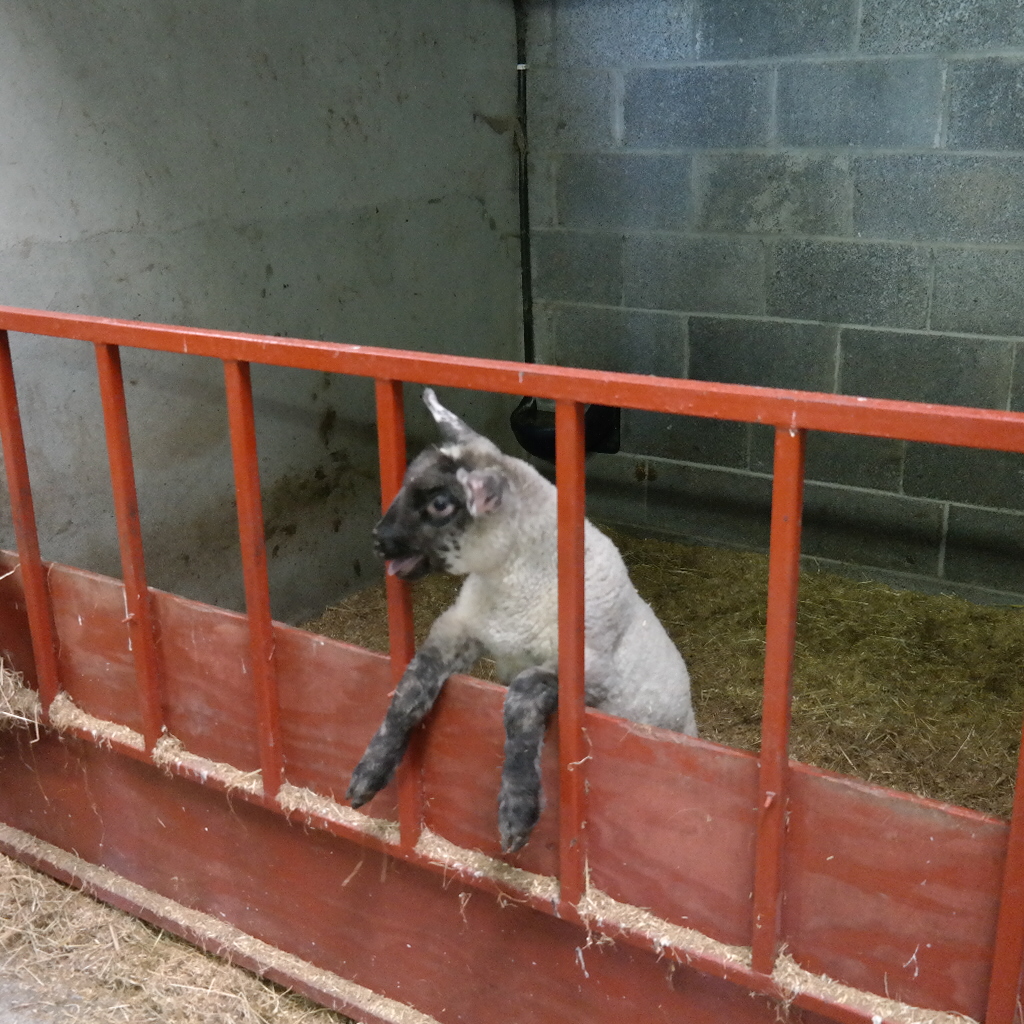
Lamb wanting a feed at Rathbaun
Old pots outside turf shed
 Upon departing Galway, the tour headed off the beaten track to a little farm to get the experience of rural life in Ireland. A visit to the lovely little Rathbaun Farm of about 120 sheep, a dozen cattle, 2 horses and 1 dog with an income supplemented by hosting tourist coaches provided the entertainment for the morning. It was interesting to compare the experience and challenges to those of farmers in Australia – farmers the world over are struggling with some of the same issues – global markets, restriction of trade, increasing costs and diminishing returns. After some of the rich farming lands we headed to the Burrens in Connaught which in comparison were a moonscape almost with huge areas of exposed limestone covering the countryside. The area is some of the worst in Ireland for farming and is the place where Oliver Cromwell resettled Catholic farmers as he gave their farmlands in Northern Ireland to Protestant farmers after the Reformation. His catchcry to Irish Catholic farmers was apparently “To Hell or to Connaught” meaning they would either die or relocate. If they could have found a huge close by market for limestone they would have made a fortune. Unfortunately such a market was not at hand and so they had to drag seaweed up from the ocean over years and years to create pasture land. The people of the Burrens were almost as tough as those of the Aran Islands.
Stephen and Elizabeth at Cliffs of Moher
After lunch it was time to head to the Cliffs of Moher which has just been voted as the top cliff experience in Europe. Apparently the English are not happy and can’t believe that anything tops the Cliffs of Dover. We will be able to compare them for ourselves when we visit Dover next month but for Dover to be better they would have to be absolutely amazing. The sun wasn’t shining on the cliffs (we did manage to have a sunny minute at one stage later in the day) but at least it wasn’t raining. There was however a wee breeze blowing (something akin to a gale) and we thought that at one point even if you did fall the howling gale would hold you up and prevent you from reaching the water. We didn’t get to see any puffins (we really have not had a good run with Irish wildlife (no puffins, badgers, stoats, deers) much to Elizabeth’s disappointment but the views were simply breathtaking – well the views and the bitterly cold gale! Given the ‘call Lifeline equivalent posters in the toilets’ the Cliffs of Moher must be a popular place to end it all. Interesting that the assumption is that people will take time to go to the toilet before they head up to jump.
Cliffs of Moher
The evening meal at Bunratty Castle was a great fun medieval banquet with plenty of entertainment. It was a quick turn around time to get ready for the dinner which did cause some issues on our return to the hotel. Some advice for people who are on a tour staying in different hotels each night – photograph or record the room number somewhere because the numbers can start to blur. Either that or try your key in each room in the wing to find the right room. It does work when the little green light shows.


Love to all
S&E


Sweating on a livelihood

Elizabeth standing in Galway Bay
The Claddagh
 This morning we set out for Elizabeth to fulfil her obligation to her mother and get her feet wet in the waters of Galway Bay. A short walk from the hotel down Claddagh Quay (where the Claddagh Ring originated) alongside the Corrib River and out to a somewhat rocky beach where Elizabeth ditched the socks and boots and gingerly entered the water. The water was just a tad cold – her feet went numb almost immediately! Exiting the water and heading back to the hotel for breakfast we came across one of the locals (well he married a Claddagh girl and had been there 36 years so he is not a local yet) who was a fisherman and played rugby for Munster. He showed us ‘The Claddagh’ a traditional Claddagh Hooker which belonged to a mate of his and was used in a Guinness Christmas ad a number of years ago. We had a great chat and personal tour around some of the areas of the Corrib River including the salmon weir and the Cathedral.
Cemetery on Inis Mor
Cliffs at Dan Aonghasa Inis Mor
After the personal tour we boarded a ferry to the Aran Islands to Inis Mor. Inis Mor is the largest of the Aran Islands and the people of the islands must be some of the hardiest people in the world. To survive and indeed make a living on these rocky outcrops showed their determination and resilience. There is very little natural pasture on the islands, just lots and lots of limestone rock. To make the pasture for cattle and sheep the farmers would go down to the ocean and collect seaweed and sand and spread it over his patch of ground which would be designated by rock walls. Obviously a long term project which would take generations to build up anything resembling reasonable grazing land. Most of the families would obviously make their living through fishing which was also an extremely dangerous way to earn a quid. The designs on Aran Sweaters had their origins in individual family patterns and served the rather gruesome purpose of identifying fishermen washed up on the Galway coast.
Dun Aonghasa
On Inis Mor we headed around to the seven churches where St Brecan established a monastic community and also to Dun Aonghasa the World Heritage site which is a prehistoric fort called the ‘most magnificent barbaric monument in Europe’. The first construction of the fort dates to about 1100BC and while the view is truly spectacular you have to wonder what the fort was to protect – I don’t figure it was worth battling over a view in prehistoric times. The fort has three separate walls and also a ‘cheval  de fris’ which is a series of upright stones set up to prevent the cavalry charging up to the fort. Given the surrounding countryside was really hard work it seemed a bit of overkill but obviously it was important enough to labour for years and years along with just trying to survive. In some ways it matched other parts on the island where a rock wall was built around an area of solid rock. There was not a blade of grass and seemed completely worthless but it was ‘Paddy’s’ patch of rock and he didn’t want anyone else laying claim to it.
Tomorrow we leave Galway Bay and explore the Cliffs of Moher.

Love to all
S&E


The Love Story

Clew Bay from Croagh Patrick
Croagh Patrick covered in mist
 Today we headed to Croagh Patrick and ventured part of the way up the mountain. The top of the mountain was shrouded in mist so we did not get to see the cone shaped top of the mountain. It would have been good to spend more time at Croagh Patrick and actually climb the whole way but it was not possible with the tour. We’ll just have to put it on the list of places to return and complete – that is getting to be quite a long list now!! Even climbing part of the way up Croagh Patrick rewarded us with amazing views of the coast line and it was not hard to see why it was a pilgrimage place for St Patrick and so many people throughout history. The mountain is famous for being the place where St Patrick fasted for 40 days, and each year on the last Sunday in July, some 30000 people make the climb to the summit to celebrate Reek Sunday. The views over Clew Bay, even from only part way up were amazing. Also on the shores of the Bay was a stark memorial to victims of the Famine in the form of a Death Ship. It makes us realise the profound impact this period of Irish history had on the country.
Kylemore Abbey from across the lake
From Crough Patrick, it was off to Kylemore Abbey in County Connemara, another beautiful location. The Abbey is owned by the Benedictine nuns who arrived there after their abbey in Ypres in Belgium was destroyed in World War 1. The Abbey, formally Kylemore Castle was built in 1876 by an Englishman, Mitchell Henry, as a gift for his beloved wife Mary. They honeymooned in Connemara and loved the area so much that Mitchell used his inheritance to buy the land and build the Castle for the love of this life. It is easy to see why he chose there, we could easily have moved in! From what we read about him, Mitchell was genuinely a generous man who looked after the local people on his estate. Tragedy struck with Mary’s death from dysentery and he couldn’t bear to bury her, so a mausoleum was built and she was placed there, where his remains were later returned after his death.
Part of the walled garden at Kylemore
Abbey
The nuns purchased the Castle in 1920 and moved in, starting a school which continued right up until 2010. Students from Australia even came over to attend with the likes of Indian Princesses  The Benedictines are still running the show today, which is the most visited attraction in Western Ireland. Our tour guide Angela told us that Sr M Magdala is her happiest sitting at the till ringing up the money! The estate also includes a beautiful walled Victorian Garden some distance from the Abbey with parts of the original hothouses still visible. All in all, the visit was lovely.
The rest of the afternoon was spent travelling into Galway with spectacular views over the Loughs that feed into the Corrib River that flow eventually into Galway Bay.
Tomorrow we head to the Aran Islands to check out a prehistoric fort and island life.

Love to all
S&E